|
See these, and more, in this issue of the Central States Archaeological Societies Journal
Click to enlarge |
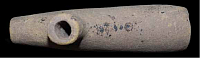
The two modified tube
pipes found in Cox Cave, Scott County, Virginia. They are both made
from sandstone. One shows a series of tally marks around the stem. Both
show
heavy age deposits, as can be seen in the images. Modified tube pipes
are very rare, with few examples known. They likely date to the Terminal
Adena period, 200 BC - AD 300. They are both in pristine condition,
and show evidence of use. Shown at top are the two pipes viewed on end,
showing
similarity in form (they were likely made by the same individual).
At center are the two pipes from above, as well as a view of the bottom
of
the larger of the two.
See A Unique Cache of Two Modified Tube Pipes and a Hematite Turtle
Effigy, by Phil Foley, Paris, Kentucky and other great relics in
the CSASI 2026
January Journal
|
Click to enlarge |
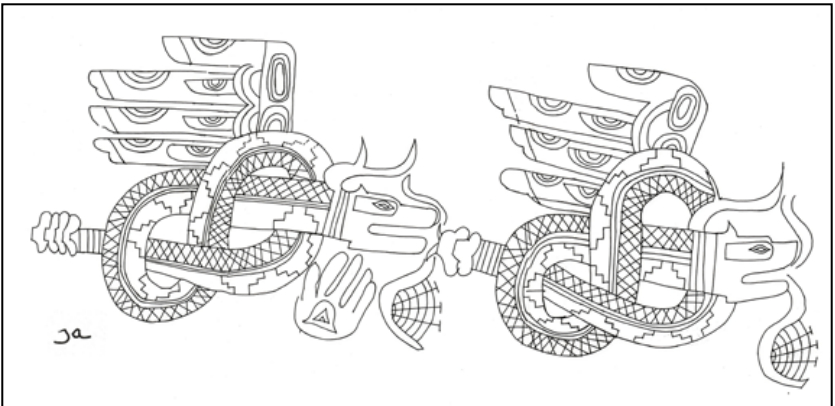
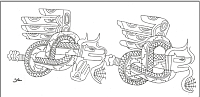
Murphy Mound (23PM43) Pemiscot County, Missouri. Shown
are two Winged Serpents with spider webs on their tongues
and a small hand with constellation at right with the portal to Milky
Way on its palm. Early Walls Engraved figures related to Holly
Bluff and Spiro engraving, circa AD 1400. Drawing by author.
See Grandmother Spider: Two Pottery Jars from Phillips County, Arkansas by
Toney Aid, West Plains, Missouri and other great relics in the CSASI 2026
January Journal
|
Click to enlarge
|
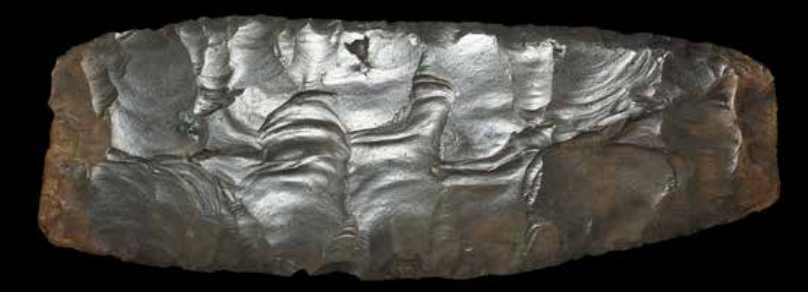
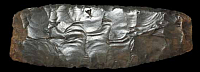
Square Knife from Indiana in the collection of Doug Goodrum, Bowling
Green, Kentucky.
See A Superb Square Knife from Indiana by by Steven R. Cooper,
Cary, North Carolina and other great relics in the CSASI 2026
January Journal
|
Click to enlarge
|
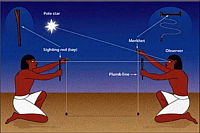
Pictorial image of how the ancient Egyptians used the Merkhet
to tell time or use as a navigational device.
See The
Enigmatic Plummet Stone - A New Look At An Old Mystery by by Derek Mays,
Rock City, Illinois in the CSASI 2025
January Journal
See this and other great relics in the CSASI 2026
January Journal
|
Click to enlarge
|
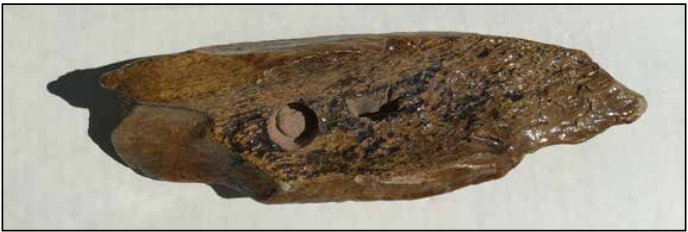
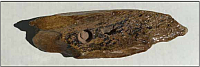
View showing butchered section of Proboscidean leg bone from Pottawattamie
County, Iowa (note rectangular space
where carbon date sample removed). Above:Figure 2. Another view of butchered
section of Proboscidean leg bone from Pottawattamie
County, Iowa (note two median areas disturbed for carbon samples).
See A Third Record of the Extinct Stag-Moose (Cervalces scotti) Antler
With Cut Marks, and Pre-Clovis Carbon Dates for Two Proboscidean Leg Bones by Dr. David A. Easterla, Ph.D., Maryville, Missouri
See this and other great relics in the CSASI 2026
January Journal
|
Click to enlarge
|
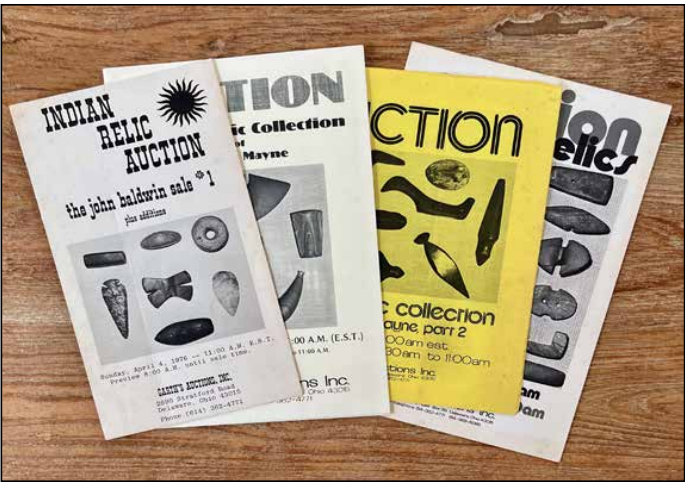
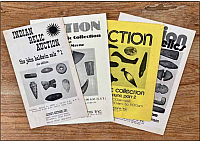
Four catalogs from Garth’s Auctions, Delaware, Ohio, 1976-1978
See Cameron Parks: Behind the Scenes by
William Moody, West Tisbury, Massachusetts in the CSASI 2026
January Journal
See this and other great relics in the CSASI 2026
January Journal
|
Click to enlarge
|
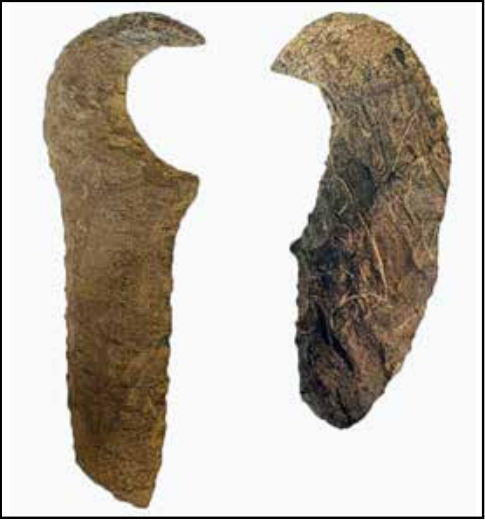
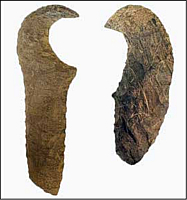
6 3/8” and 5 1/2“ Dover chert talon effigies, Stewart
County, Tennessee, curation and photograph by James Spears.
See Dover Chert Bifaces and Other Artifacts from a Village Site in
Stewart County, Tennessee by Dr. Sandy B. Carter, Jr., Big Canoe, Georgia in
the CSASI 2026
January Journal
See this and other great relics in the CSASI 2026
January Journal
|
|
|