|
Conoy Indian Town Trade Beads Lancaster County, Pennsylvania (1718-1743)
|
by Keith Cicero |
| Central States Archaeological Societies 2026
April Journal |
Hallam, Pennsylvania |
|
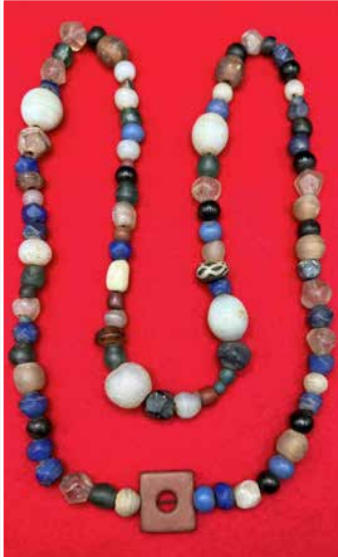
Figure 1. A 92 bead strand of trade beads found at Conway Town, in Lancaster, Pennsylvania.
|
This lovely strand of European fur trade glass beads dates to the late 1600s
and early 1700s. It was recovered on storied ground that was once “Conoy
IndianTown.” The village (or town) existed from about 1718-1743. The
Conoy were related to the Nanticoke Tribe, with whom they would later merge.
The Conoy Tribe had gradually migrated into Pennsylvania from the area of
Chesapeake Bay where they were known as the Piscataways.
The Piscataways were some the first of the Native groups that early European
explorers encountered in what is now the state of Maryland. The famed Captain
John Smith made note of their villages during his 1608-1609 exploration of
the Chesapeake Bay region. His travels eventually took him up the Susquehanna
River, where he would also meet with the Susquehannock. Later Governor Calvert
met with their leader known as Wannis in 1634 to ask for permission to settle
in the area. Colonial records that are preserved in the Archives of Maryland
provide some great accounts of these interactions with the Piscataway and
allow us to trace the main tribe’s movements from Piscataway Fort on
Piscataway Creek to Zekiah Fort (1680) to the Virginia Piedmont (1697) and
then back to Maryland at Conoy (now Heater's) Island (1699). They remained
there until at least 1712. Sometime after 1712 the Piscataway Indians abandoned
Maryland and headed to Pennsylvania to settle, where they came to be known
by the English version of their Iroquoian name,"Conoy". The Conoy
moved from their original settlement at Conejoholo to Conoy Town (where these
beads were recovered) in 1718, then onto Shamokin in 1743, and then to Juniata
in 1749, where they lived side by side with other tribes, including the Nanticokes.
In 1754, the Conoy and the Nanticoke natives moved once again, this time
to Otsiningo, New York. Shortly after this move to New York, references to
the Conoy tribe appear to all but have disappeared from the historical record
except for them being mentioned on treaties and at council meetings. In October
of 1758, a group of Conoy Indians were among the “Six Nations Indians” present
at the treaty signing in Easton, Pennsylvania. Nearly two decades later,
in September of 1776, the Conoy attended a grand Indian council at Niagara.
One of the last accounts of them was in 1793, when they were present at the
council held in Detroit. How the Conoy became a part of the 1793 council,
or how they...
Read the complete "Conoy Indian Town Trade Beads Lancaster County,
Pennsylvania (1718-1743)" column
in the Central States Archaeological Societies 2026
April Journal which can be purchased on-line after March 2026
|
|